Pink Lizzie
Installment 3 (Part 1, Chapter 3) in the HAUNTS series

Good morning. This is the third story in the HAUNTS book, in Part 1 concerning ghosts. And no ghost has ever captured the imagination of my hometown of Memphis so thoroughly. Let’s dig in.
It all began in the piano room…
Clara Robertson never dreamed of ghosts and goblins as a child—at least as far as we know— but by the time she reached her early teens, she was a sought-after psychic medium in a city gripped with chaos, disease, and violence. Just to set the stage, so to speak, let’s go back in time to early 1870s Memphis, Tennessee.
Every living Memphian in those days was affected in one way or another by the profound losses of the Civil War, rampant disease, and the immense upheaval that transpired in the years following the war’s conclusion. Newly-emancipated Black citizens faced a dangerous future in a hostile place. Families of all shapes and sizes had lost sons, brothers and fathers to the war, or from its lingering wounds. Crime and lawlessness reigned. Waves of Yellow Fever swept through the city, and worse epidemics were still to come, in a time when no one had yet discovered the cause (spoiler alert: mosquitoes). In 1871 Memphis, if the mosquitoes didn’t kill you, life on those mean streets certainly could.
As a result, there was a huge rise in Spiritualism— a religio-spiritual movement grounded in communications between the living and the dead. (More of this in the next chapter, Conjured Spirit.)
So it is perhaps little surprise then that a 13-year-old girl became a local sensation in a city gripped with spirit-o-mania when she claimed to have seen, and talked to, a real live ghost.
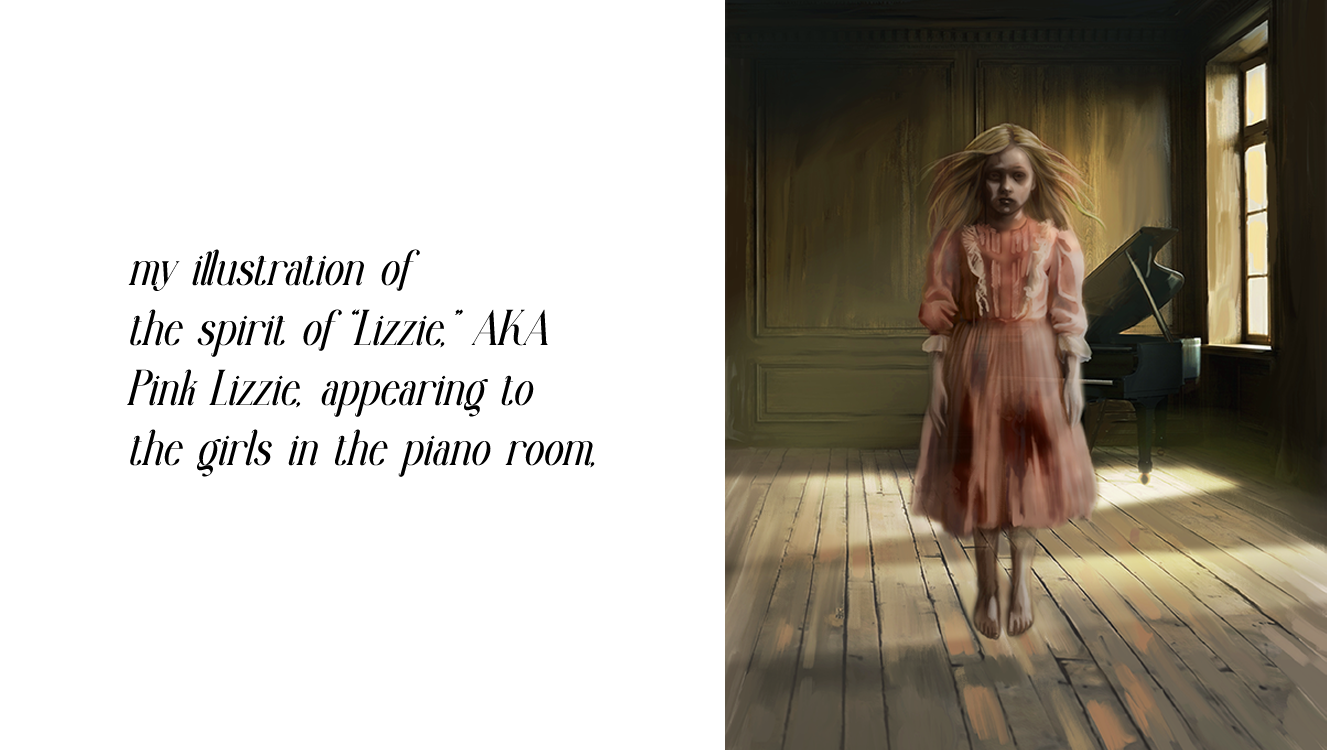
You may have read accounts of the notorious Pink Lizzie, the original creepy-Victorian-child-in-a-dress that has now become an icon of ghost tropes. Few ghost stories have gripped the attention of a city so completely as the tale of Pink Lizzie did back then. If you are imagining a gaunt little blonde-haired girl, mouldering from the grave, and wearing a doll-like pink dress caked with moldy slime, then congratulations, because that is the very image of Pink Lizzie. And Clara is the person who first saw her.
According to The Daily Memphis Avalanche, the ghostly apparition of a girl approximately 8 years of age, with “sunken lustrous eyes” and wearing a “slimy” pink dress, appeared right next to Clara while she was practicing for a recital in the music room at her school, alone.
The school, called the Brinkley Female College, was located in a two-story mansion that had once been the home of Colonel William Davie. After the Civil War, the veteran Confederate went bankrupt, and sold the property to J.D. Meredith, who established the school and became its Headmaster. The disgraced rebel leader then moved to Kentucky.
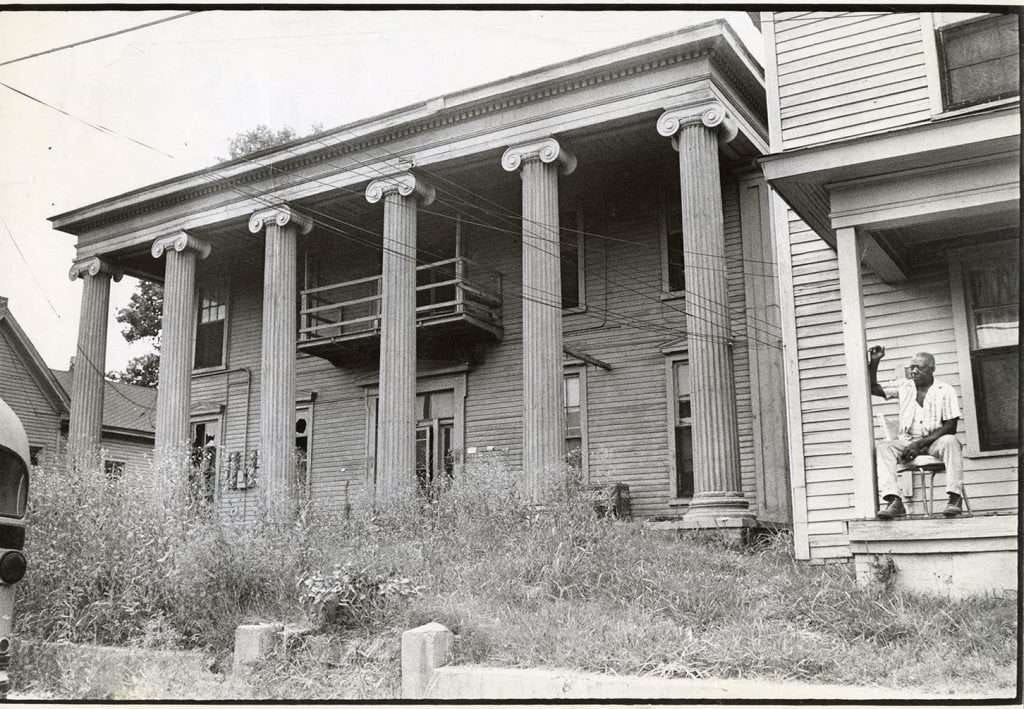
Clara had only been a student at the B.F.C. since the previous Fall, and was not a boarder but a local Memphis child enrolled for daytime-only classes, which included piano lessons and party manners. So on that fateful day in February as she practiced her piano recital piece, a shadowy figure appeared before her and then instantly solidified into the form of a terrifying little dead girl in a pink dress. Clara shrieked in terror and ran screaming out of the room, straight into one of the bunk rooms where one of her fellow students was resting in bed, feeling sick. Clara jumped into bed with her classmate, breathlessly explaining that she had seen a ghost, and wildly motioning toward the door with her hands. Soon afterwards, the little ghost followed into the room and both of the girls were able to plainly see it, and so they shouted wildly in fright, as the ghost proceeded to disappear right through a wall.
Miss Jackie Boone, one of their teachers, was the adult who unfortunately had to deal with the aftermath of this drama, as the entire school (approximately 50 girls) all fell into ghost fever. Some cried, some laughed, and many of them ridiculed Clara and her feverish classmate. Clara was sent home, her parents were fully apprised of the situation, and she was reprimanded sternly for her nonsense.
Following this incident, she was welcomed back to school the following day, Wednesday, and presumably nothing supernatural happened, to the great relief of the schoolteachers. But on Thursday it happened again, once again in the music room. Clara was in there with two other girls—because after all, the recital still needed to be practiced for— and sure enough, there was an unusual noise, described as a kind of water splash on the hard floor. All three girls turned to look, and what they saw was “the same spectral visitor of two days before,” as the newspaper reported. The trio fled the room in a panic, still not having heard the ghost speak aloud. Once again the peace and order of the school devolved into the wild chaos that only panicked adolescents can muster. Another day of study, ruined.
The following Tuesday, gosh darn if it didn’t happen again, and in the music room. Clara ran to find Miss Jackie, and they returned to the piano room to settle this matter once and for all. And behold, the little ghost was patiently standing there, visible to both teacher and students. This time Clara spoke directly to it, and asked it what it was doing there and what it wanted.
The ghostly girl answered Clara, saying that under a tree stump, about 50 yards from the house, there were some papers rolled up in a jar, buried for safekeeping, and that she wanted Clara to retrieve them. Over the course of several more days, the accounts say that the ghost appeared and provided more and more information to Clara. She revealed that her name was Lizzie Davie, daughter of Colonel Davie, and that the papers in the jar would reveal the truth surrounding her father’s bankruptcy.
Well as you might imagine, once the journalists caught hold of this story,
accounts of it were everywhere, and spread to newspapers as far away as Wisconsin and beyond. This story had everything: innocent little girls, a mouldering and slimy ghost, a bankrupt Confederate, and a mystery jar.
Ultimately, the drama unfolded into a massive, city-wide mania to come and spectate at the LIVE excavation of the jar, an event for which tickets were widely sold (by Clara’s father, naturally). In front of hundreds of onlookers, a large jar filled with mysterious contents was allegedly unearthed, and Mr. Robertson stopped short of opening it. Instead, he declared that the jar would be opened in a more suitable location, and that details of this formal event would be publicized shortly. The jar was stowed, unopened, in a “safe location.”
Perhaps you can guess what happened next, or at least a version of it. As the public anxiously awaited the unveiling announcement for two months, instead they got a report that the Robertson house had been burgled. Mr Robertson had been attacked and found unconscious from a head wound, and the jar was forever gone.
The sad ending to this story is that the Brinkley Female College collapsed under the enormous weight of this scandal, both because of the mass exodus of current students and the unwillingness of new families to enroll their children in such a disreputable place.
The teenaged Clara Robertson, however, was not in need of a new school to attend, because her father had career plans for her. Having already succeeded in renting out the local Greenlaw Opera House for various interviews and events surrounding his daughter’s interactions with “Pink Lizzie,” he continued to pursue profit from this story by finding new ideas with which to prolong the spectacle.
The teen was promoted for her first post-Lizzie stage appearance as follows: Miss Clara Robertson has kindly consented to appear upon this occasion in her TRANCE STATE, in which a most angelic expression possesses her, beyond the power of language to describe. Admission, 75¢.
Clara went on to perform several times on stage in her teens, including one onstage battle of wits with the notorious “medium detective” Professor Van Vleck in a popular 19th-century format in which one performer attempted to debunk the supernatural claims of the other. A sort of Victorian precursor to today’s outrageous debate podcasts, if you think about it.
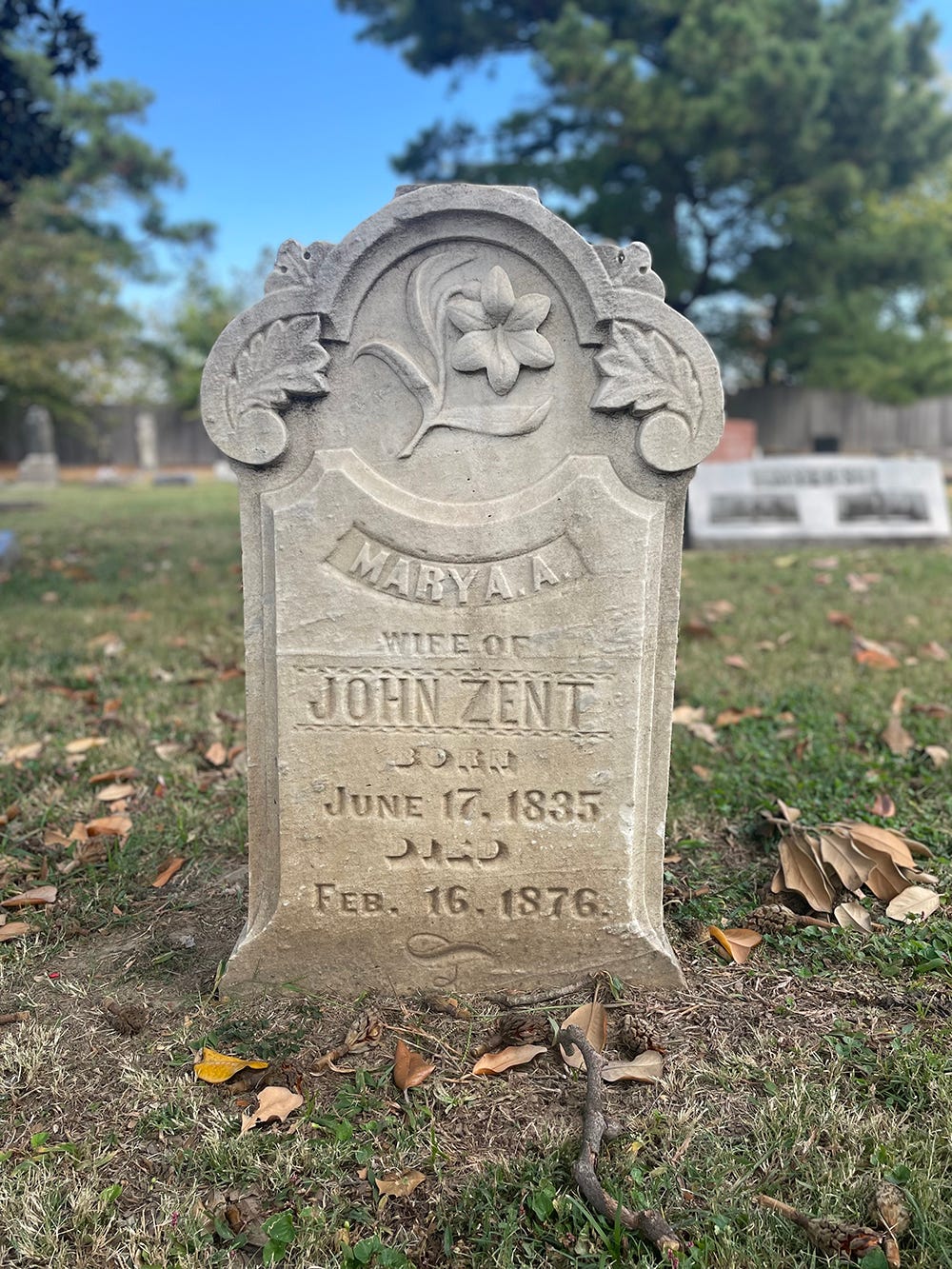
She later made herself available for hire as a psychic medium, enjoying only a very short career as such before marrying a much older man and moving into Memphis’ Market Street projects. Clara died of consumption at the tender age of 26, when her only son David was just a toddler.
She lies in an unmarked grave alongside her husband John Zent at Elmwood Cemetery in Memphis.
As for the final resting place of little Lizzie Davie? Well, records show no daughters for the old Kentucky colonel. Who do you think she was?